

Evaluation of suppliers according to customer requirements, using the Global Standards audit methodology.

SUPPLIER AUDITS
Certified by Global Standards
Supplier compliance audits (also known as Second-Party Audits) are based on models that consider the specific requirements of clients, which may also be aligned with national and international standards.
Once the customer or supplier authorizes the audit, the next step is to complete the checklist sent by Global Standards for self-assessment and ensure that the documentation to be reviewed during the audit is in place. Once it is demonstrated that the supplier's system meets an acceptable standard, the official event is planned and developed in accordance with the established model's requirements. Finally, the event results are sent to the client and, if authorized, shared with the supplier.
Once the audit is authorized by the client or supplier, the next step is to complete the checklist sent by Global Standards as a self-assessment measure prior to the official execution of the audit. When it is demonstrated that the supplier’s system meets an acceptable level of compliance, the official event is scheduled and carried out based on the requirements of the established model. Finally, the results of the event are sent to the client and, if authorized, they are also delivered to the supplier.
EVALUATION PROCESS
Global Standards has a group of professionals dedicated to applying the supplier evaluation methodology through the planning, execution, and conclusion of audits, using the following evaluation model:
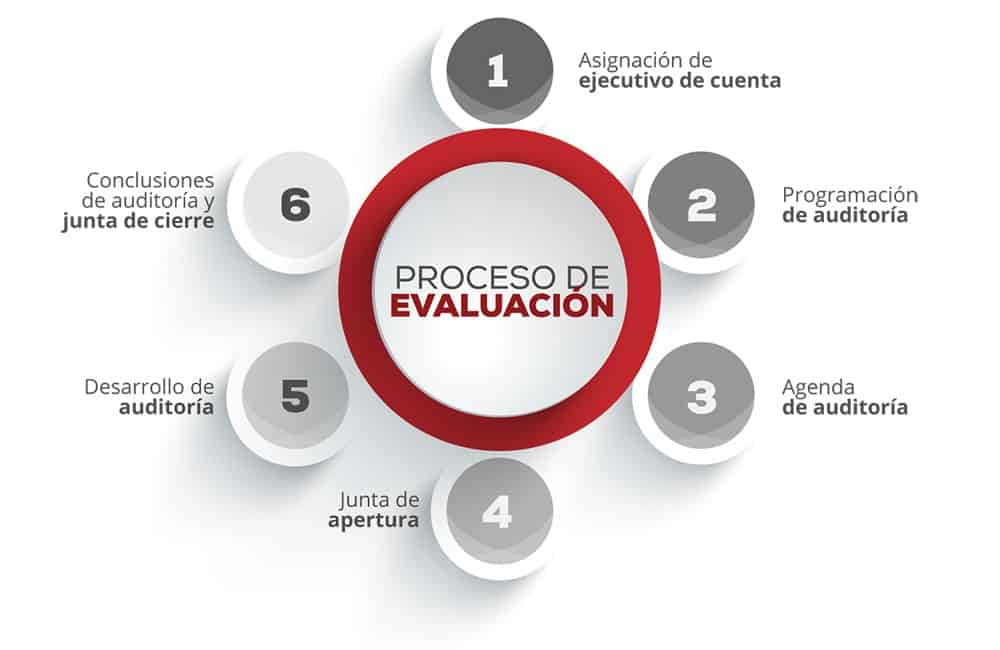
ACCOUNT EXECUTIVE ASSIGNMENT
Global Standards will assign an account executive, who will be responsible for quoting and billing the service, as well as keeping the client informed about the audit process.
AUDIT SCHEDULING
Our Planning Department will coordinate logistics with the interested parties to determine the date, location, documents, and type of audit to be carried out.
AUDIT AGENDA
The assigned auditor will prepare a tentative agenda that will outline the activities to be carried out during the audit.
OPENING MEETING
The auditor begins the audit with an opening meeting and a brief tour of the client’s facilities; during this meeting, the audit protocol is presented, indicating the audit objectives and the responsibilities of both the auditor and the auditees.
AUDIT EXECUTION
During the execution of the audit, objective evidence is collected through interviews with personnel involved in the different processes, according to the scope of the evaluation, in order to determine the level of compliance.
AUDIT CONCLUSIONS & CLOSING MEETING
Based on the evidence samples collected by the auditor, the conclusions and results of the audit are determined. The auditor will hold a closing meeting to report the audit findings.
HOW TO OBTAIN THE SUPPLIER AUDIT SERVICE?
Process for obtaining a supplier audit from Global Standards.The evaluation process covers every detail to ensure that the supplier adequately meets the customer's requirements.
- 1 Define the requirements and regulations to be audited. .
- 2 Define the way Client and Global Standards work together (method, scope, and responsibilities).
- 3 Design and development of audit reports.
- 4 Auditors' calibration and approach.
- 5 Allocation of supplier portfolio.
- 6 Delivery of reports and/or evaluations.
BENEFITS
| MAINTAIN ACTIVE SUPPLIER STATUS Comply with the requirements established by your clients in order to remain active as a supplier. |
|
| REGULATORY COMPLIANCE Comply with applicable standards or regulations. |
|
| ENSURE COMPLIANCE WITH ESTABLISHED REQUIREMENTS Maintain the client's requested requirements, ensuring compliance and continued authorization as a supplier. |
|
| CLIENT CONFIDENCE Generate confidence throughout the supply chain. |